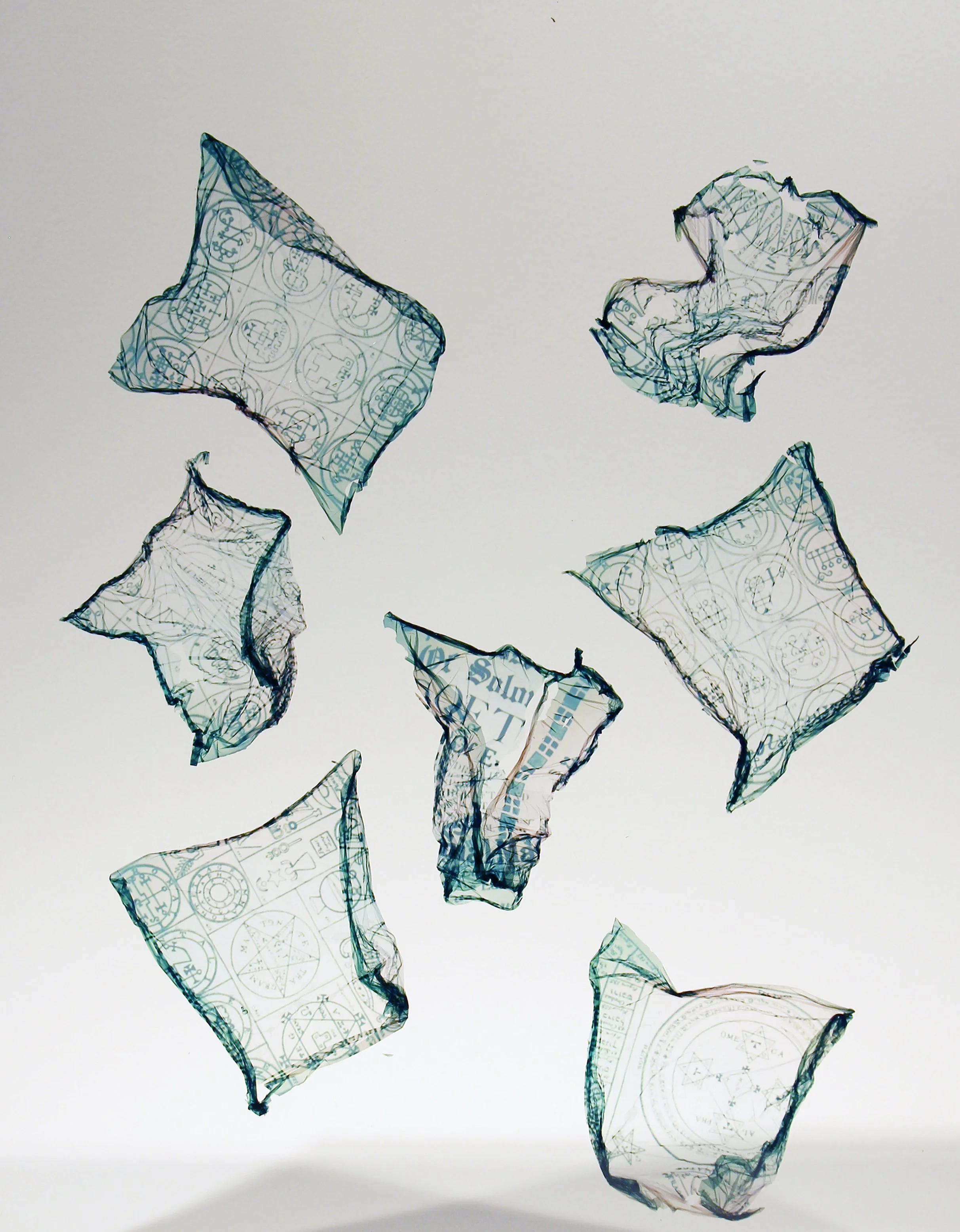
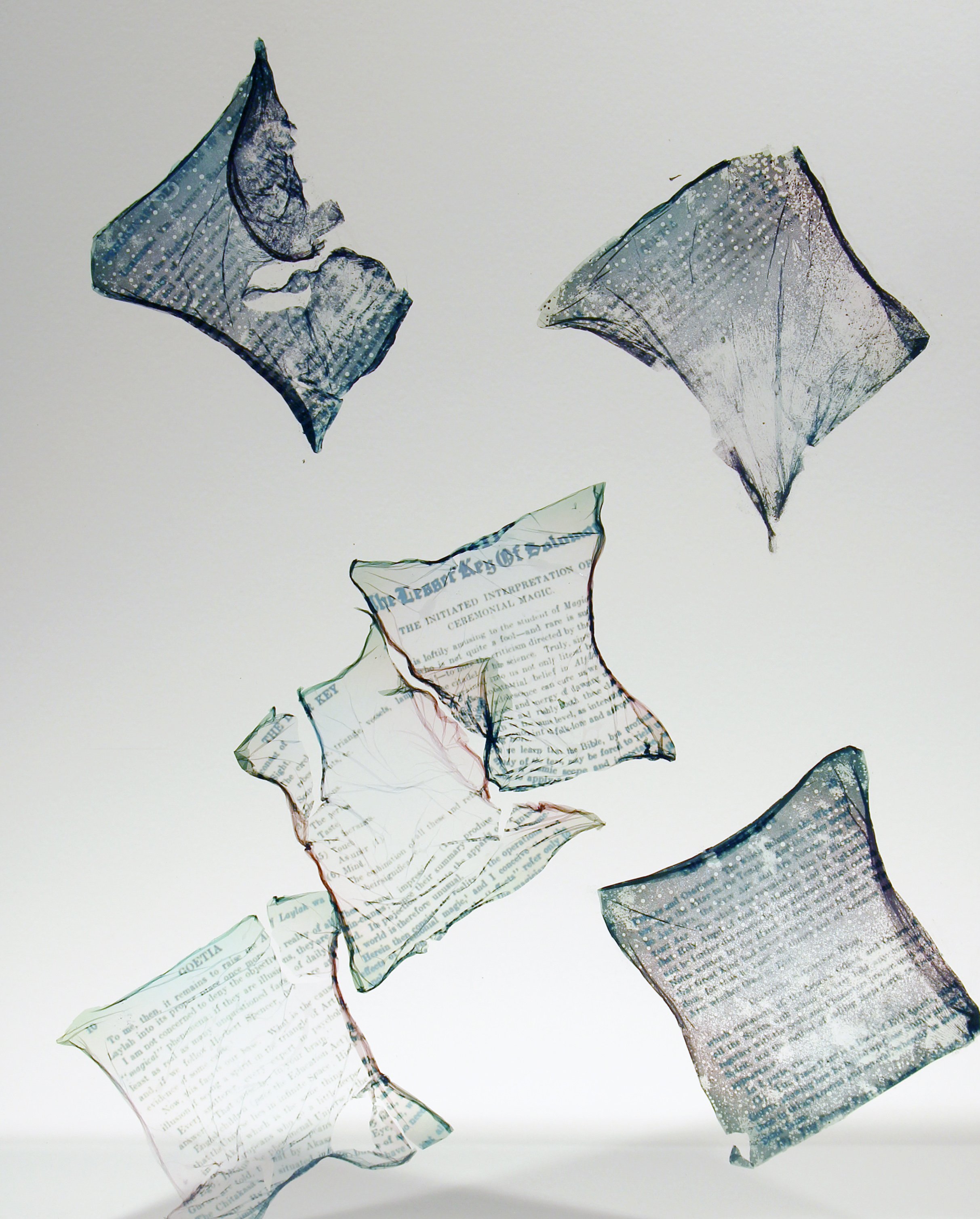
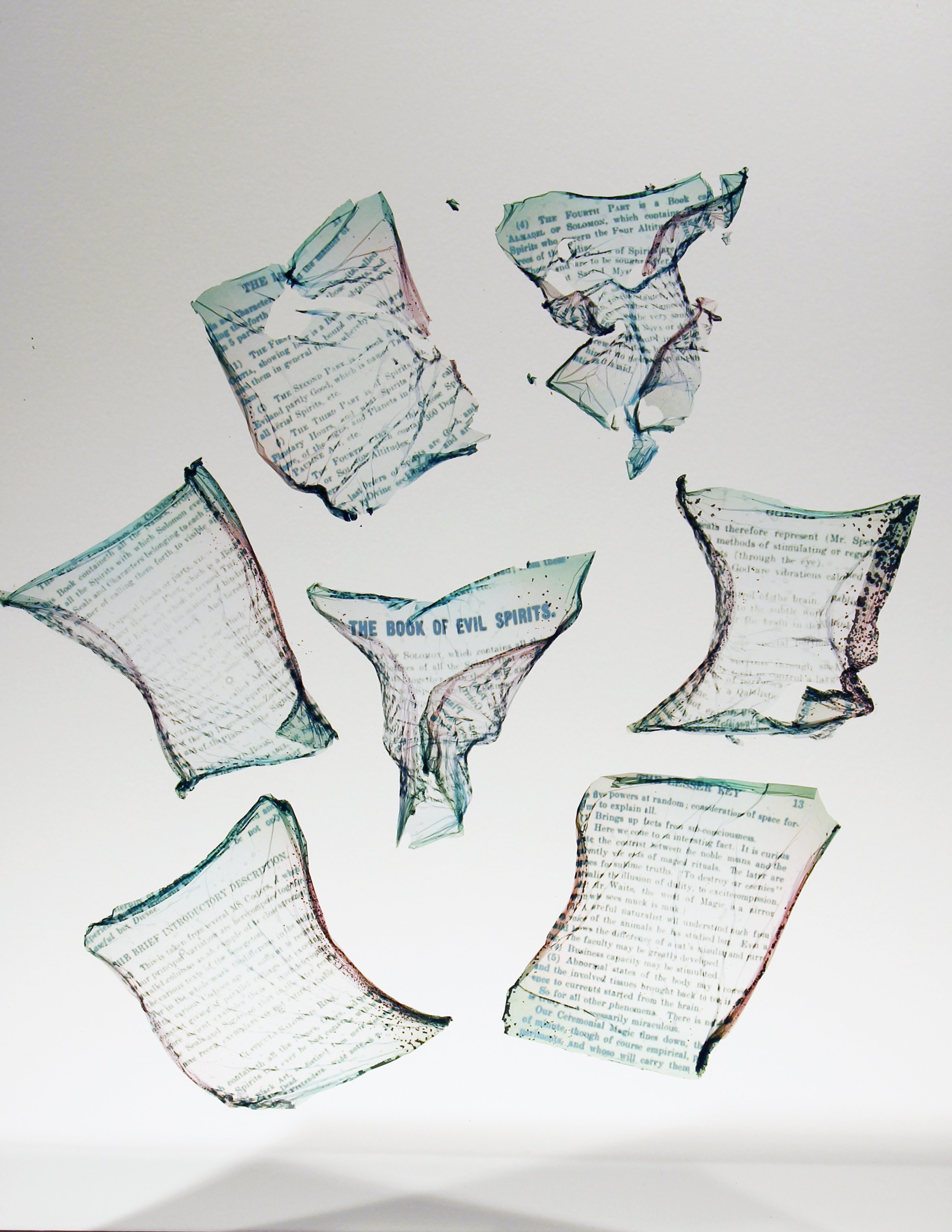
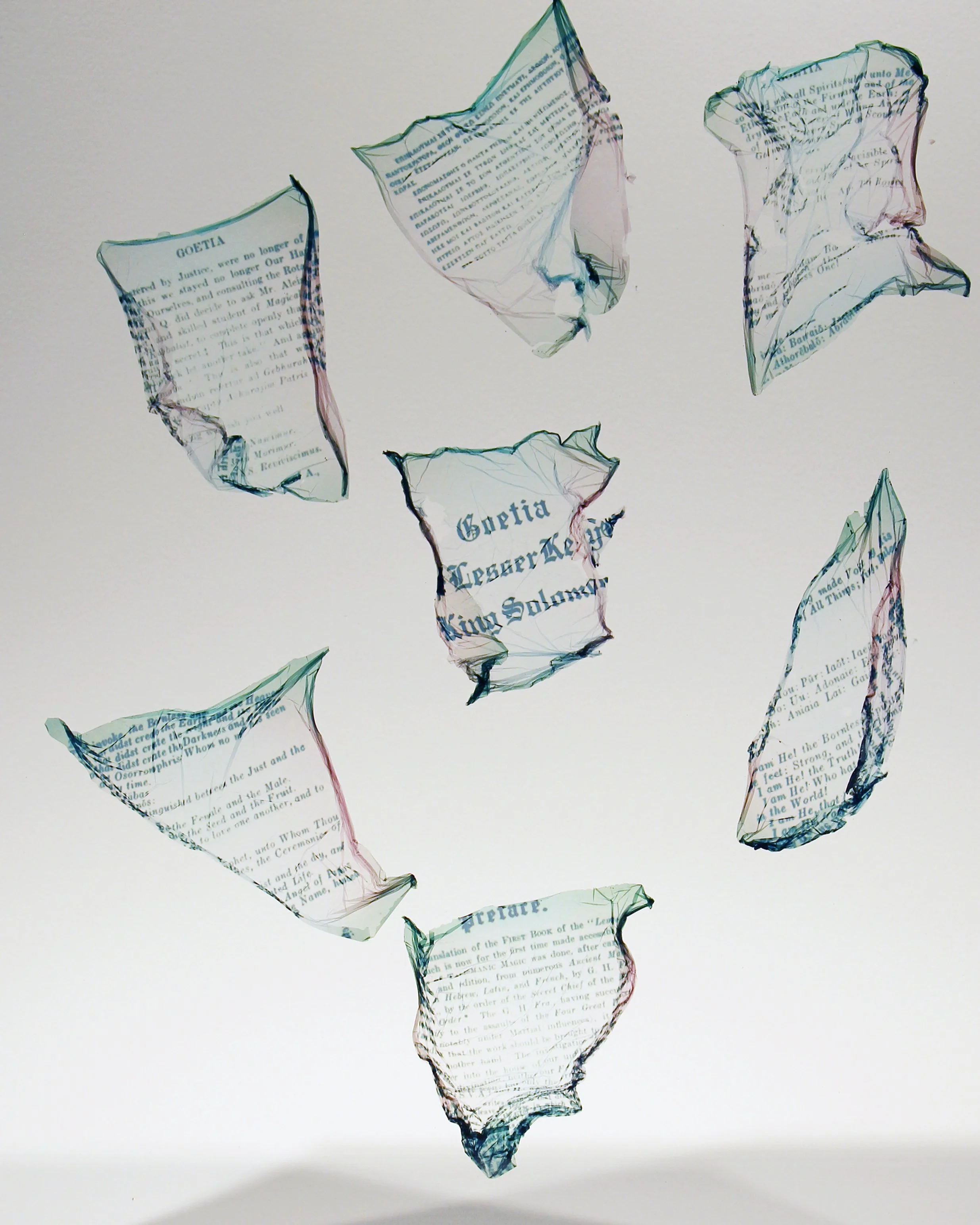
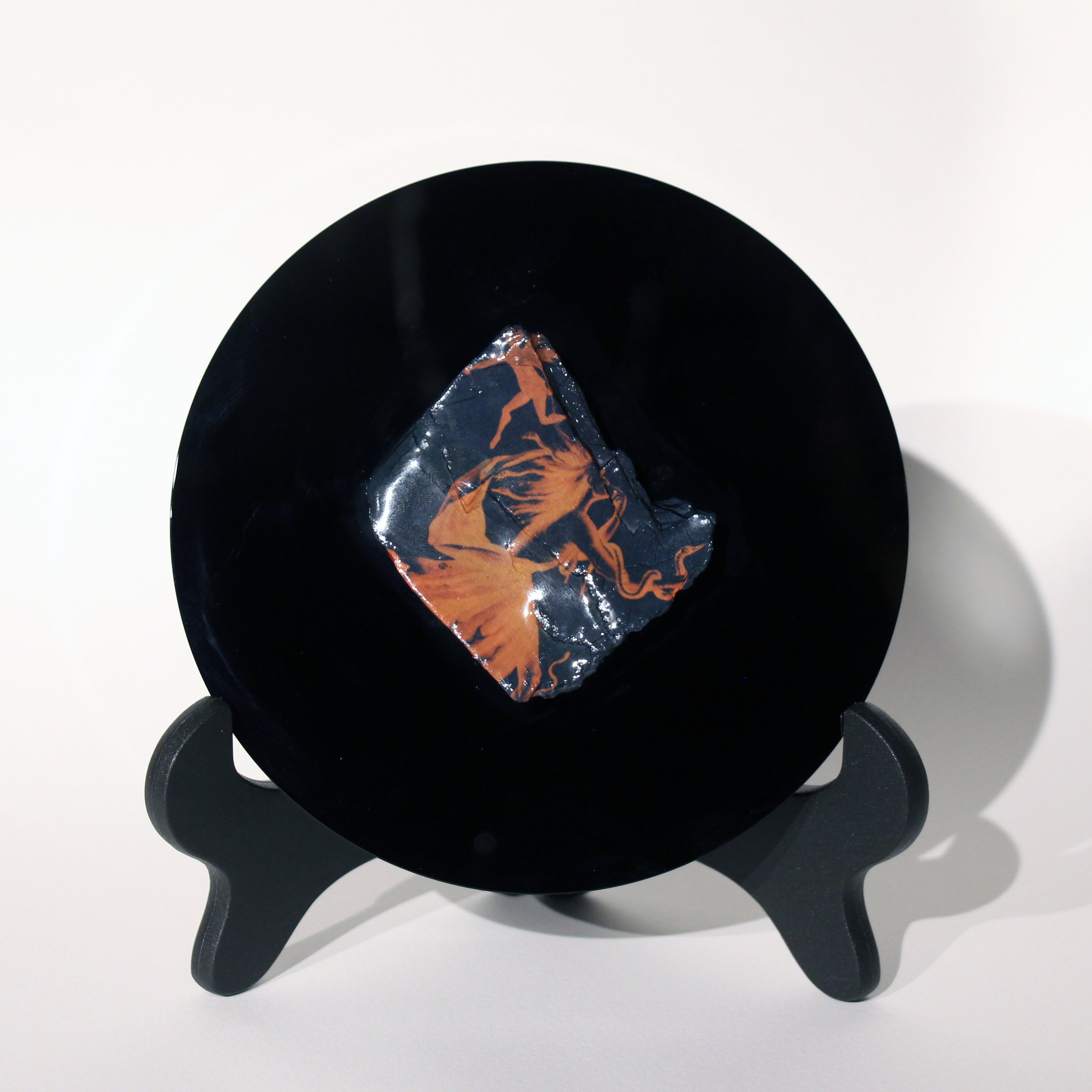
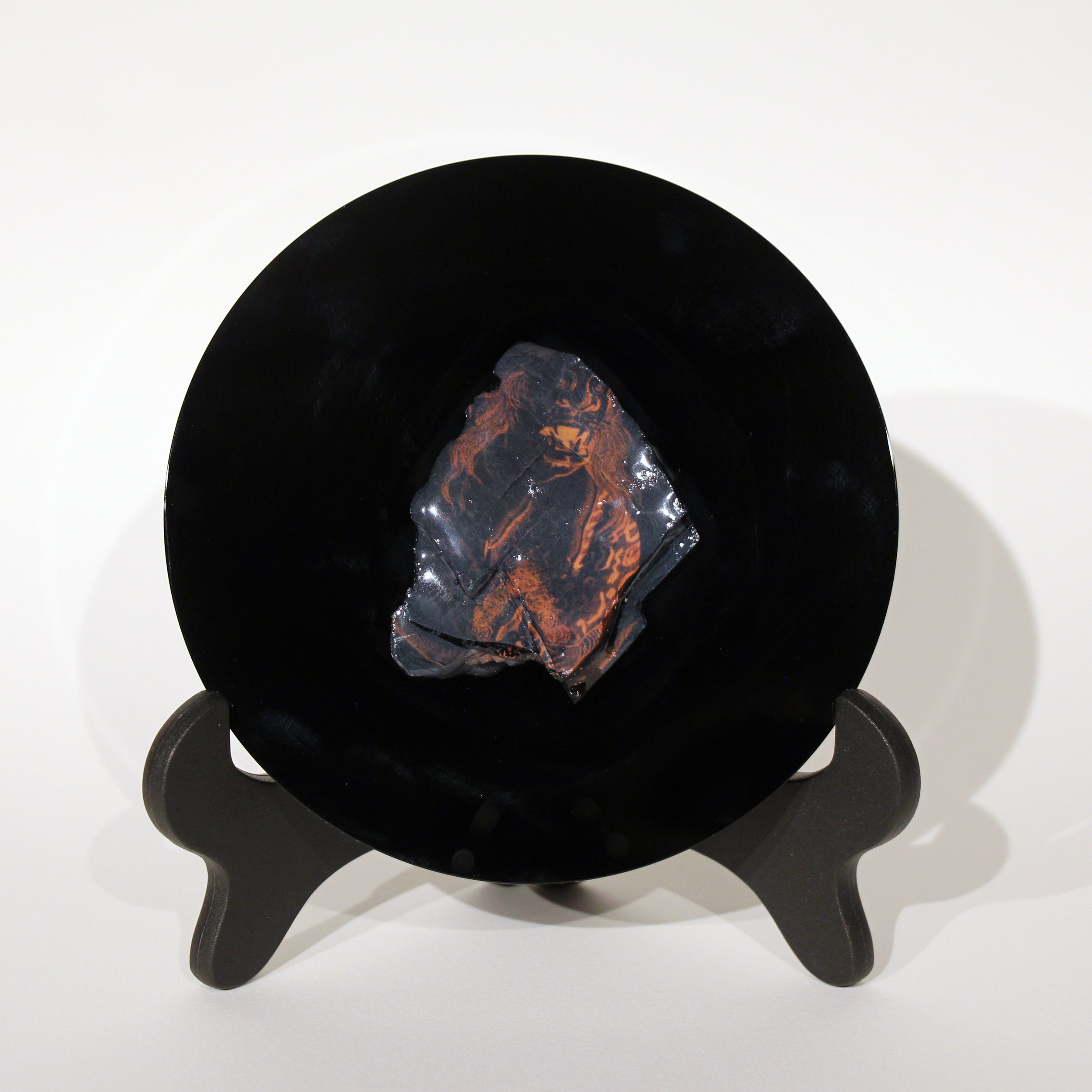
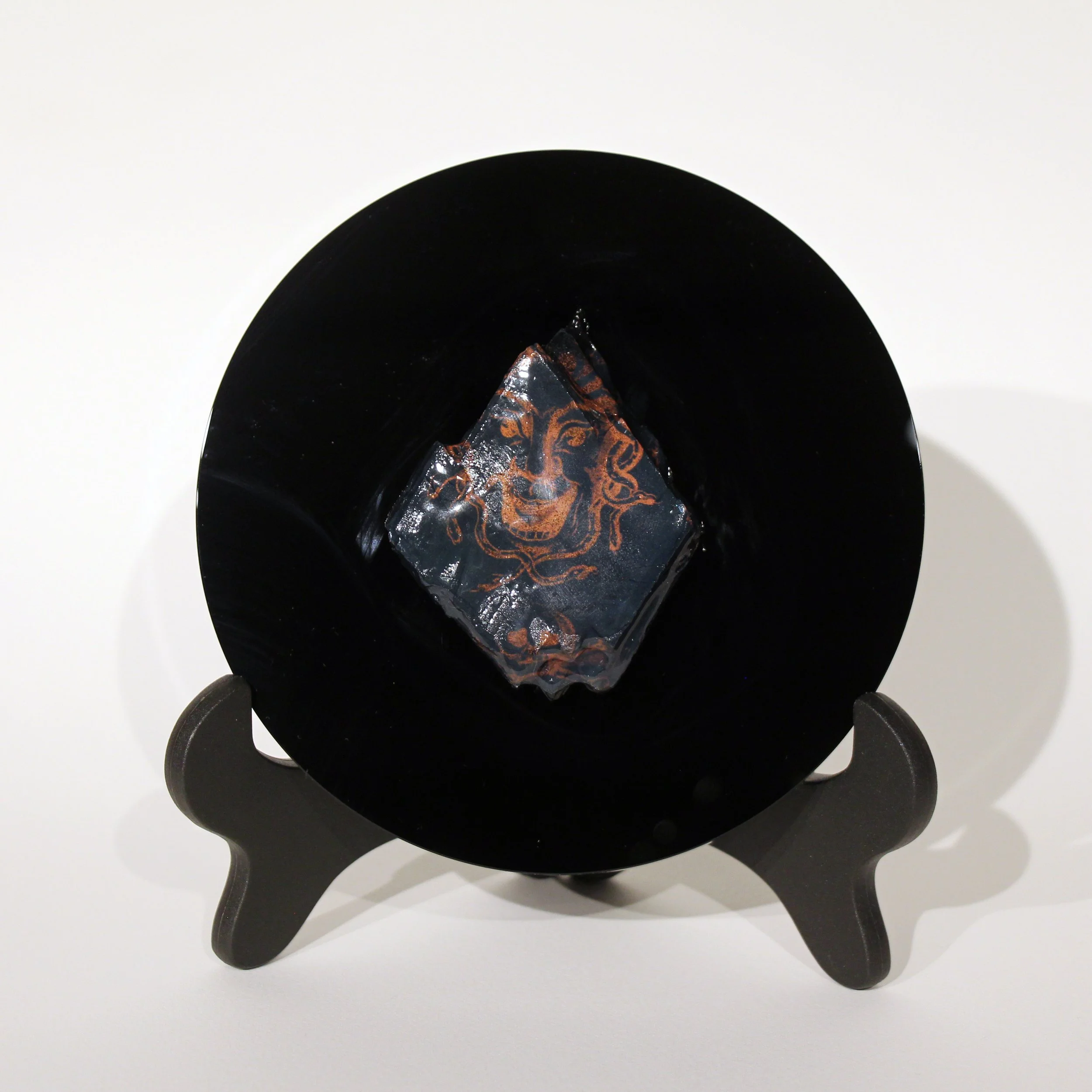
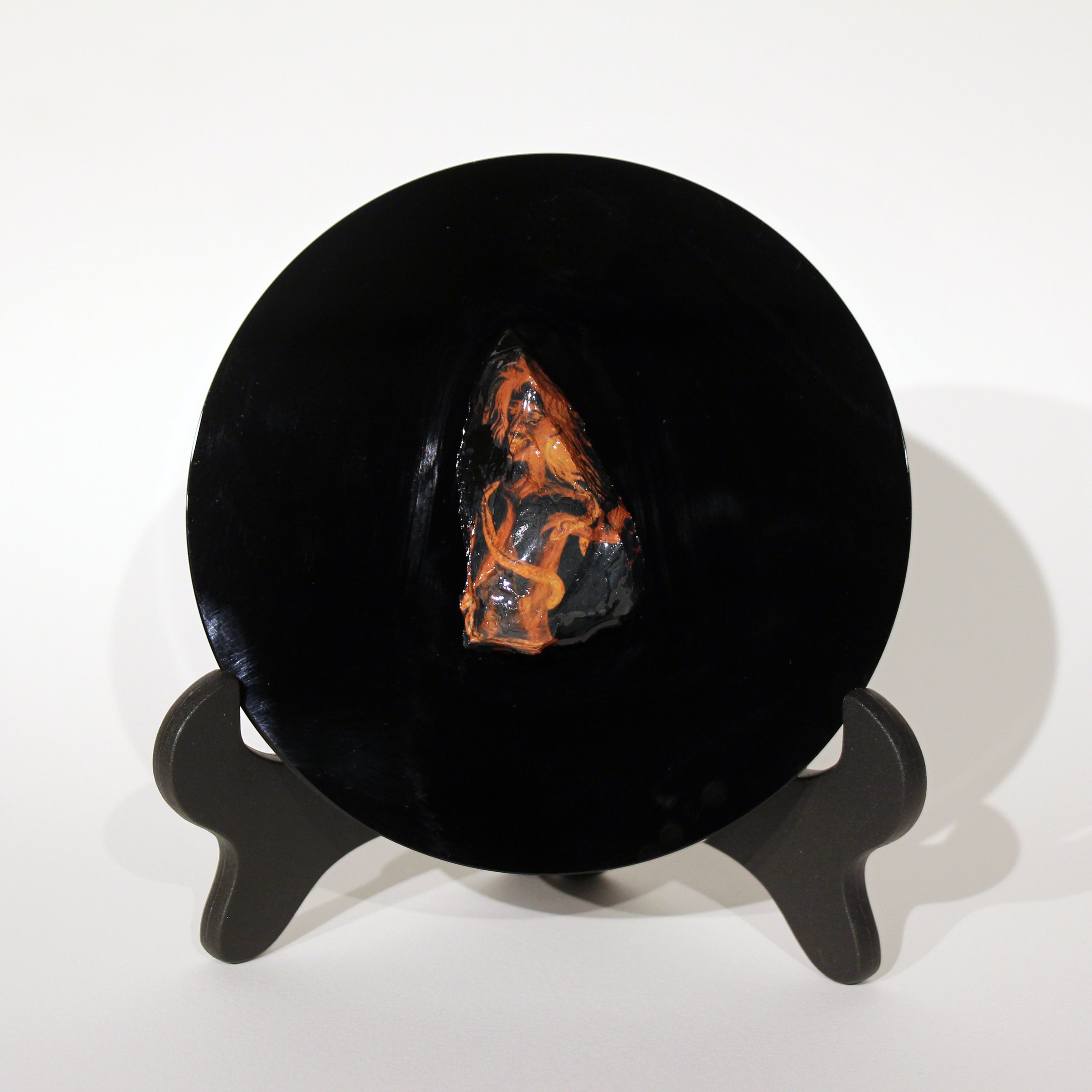
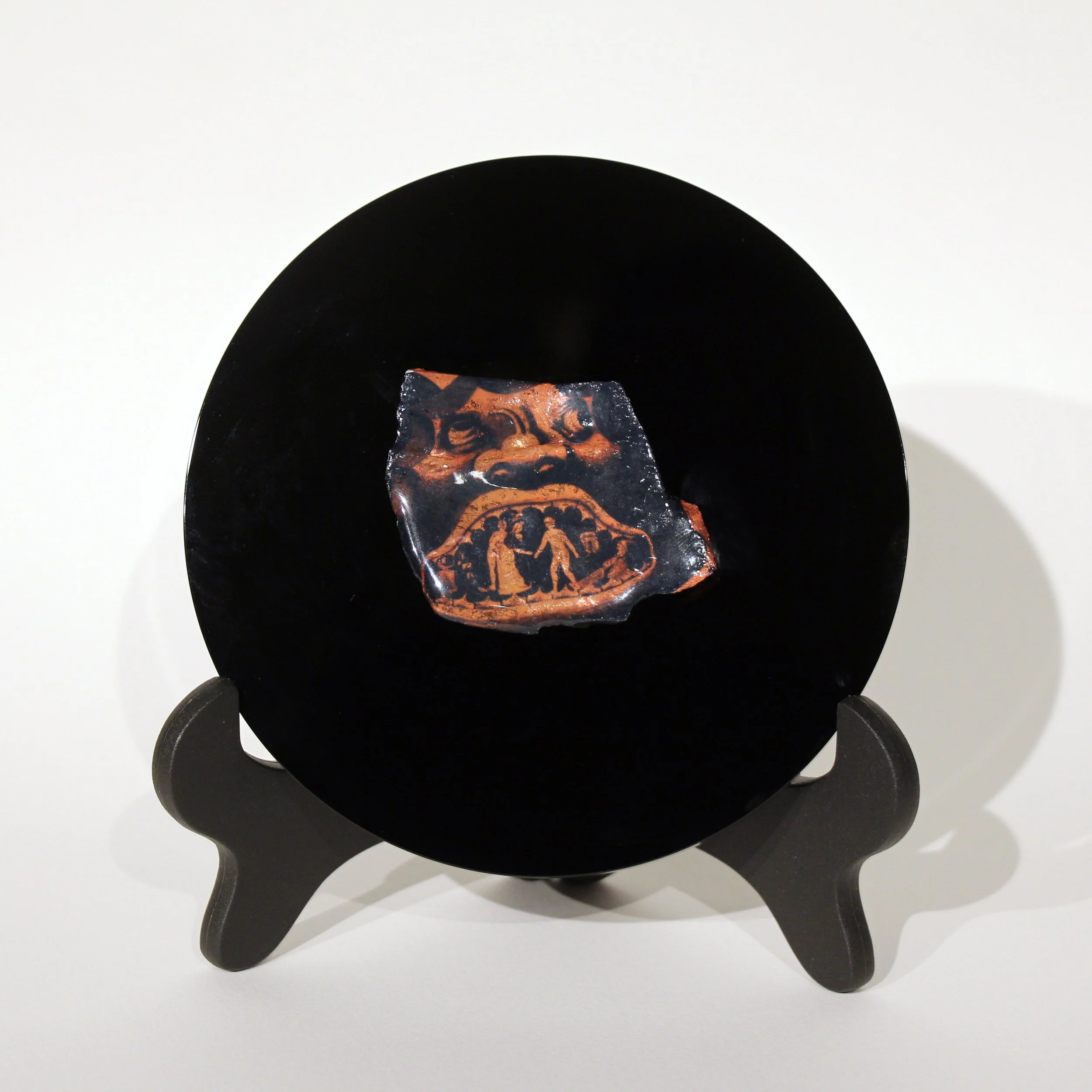
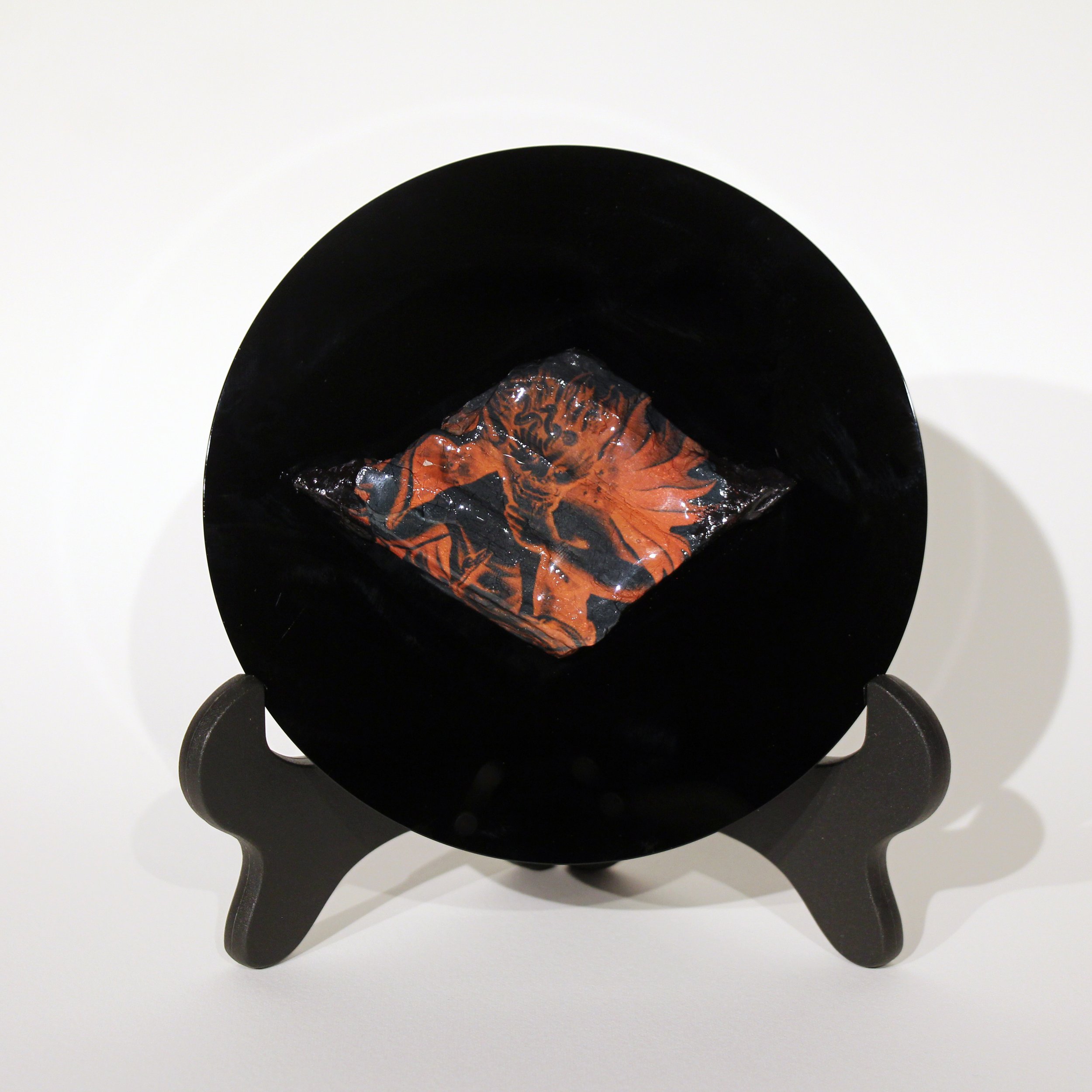
The connection to joy can sometimes be a dark and twisted one, such as schadenfreude, a form of pleasure born from the suffering of others. This sentiment was captured by philosophical moralist, Arthur Schopenhauer, who once said, "To feel envy is human, to savor schadenfreude is devilish." Drawing from demonic illustrations in the 1792 grimoire, Compendium Rarissimum, and the 1916 first mass produced copy of the grimoire, The Lesser Key of Solomon, the work questions how joy can emerge from harm and whether such emotions are inherently immoral or an intricate part of our psychological makeup. Fragments of Infernal Schadenfreude utilizes Selenite, a crystal associated with purity, and mounts these emulsion-transferred fragments onto Black Obsidian scrying mirrors. This material choice creates a layered dialogue. While the Selenite suggests a cleansing of negative energy, the Obsidian acts as a conduit for truth, revealing hidden fears, flaws, and suppressed negativity. A perverse celebration of harm, schadenfreude often stems from superiority, revenge, or personal justification. In a modern landscape where division fuels these primal impulses, these photo-sculptures explore how intrusive feelings are revealed and processed. Schadenfreude invites viewers to engage with the discomfort of these emotions through the infernal and reconsider how we judge them, both in ourselves and in the collective.